


Upper back stiffness is something many people experience, particularly after long periods of sitting, working at a desk or spending time on phones and devices. It often presents as a dull ache between the shoulder blades or a feeling of tightness that gradually builds throughout the day.
While it can seem like a minor issue, reduced movement in the upper back (thoracic spine) can have a wider impact on how the neck and shoulders function. Improving mobility in this area is an important part of reducing discomfort and maintaining efficient, pain-free movement.
At Vitalize Physiotherapy & Sports Injury Specialists, we regularly assess and treat upper back stiffness as part of physiotherapy, rehabilitation and injury prevention programmes.
Why Upper Back Stiffness Develops
In many cases, upper back stiffness is linked to modern lifestyle habits. Prolonged sitting, driving and screen use often encourage a more rounded posture, where the shoulders drift forward and the upper back remains in a flexed position.
Over time, this can lead to:
- Tightness through the chest and anterior shoulder muscles
- Reduced activation of the postural muscles that support the spine
- Decreased mobility within the thoracic joints
From a clinical perspective, this creates a movement imbalance. The thoracic spine becomes less able to extend and rotate effectively, which alters how load is distributed through the spine and surrounding joints. As a result, other areas like the neck and shoulders are required to compensate.

How Upper Back Stiffness Affects the Neck and Shoulders
When movement through the thoracic spine is restricted, it often leads to increased strain elsewhere.
Shoulder Function and Movement:
The thoracic spine plays a key role in overhead and rotational movements. Adequate extension and rotation allow the shoulder blade to move efficiently. When the upper back is stiff, the shoulder joint is required to work harder, which can contribute to discomfort and conditions such as impingement or reduced range of movement.
Neck Strain and Headaches:
A stiff upper back often contributes to a forward head posture. This increases load through the cervical spine and surrounding musculature, which can lead to neck tension, stiffness and, in some cases, tension-type headaches.
Posture and Muscle Imbalance:
Restricted thoracic movement can reinforce a rounded shoulder posture. Over time, this may lead to ongoing muscle imbalance, where some muscles become overactive and others underused, further contributing to discomfort and reduced movement efficiency.
Simple Ways to Improve Upper Back Mobility
Restoring movement to the thoracic spine does not require aggressive stretching. Consistent, controlled movement is often more effective.
Thoracic Extension Over a Chair:
Sit upright with your hands supporting your head. Gently extend your upper back over the back of the chair, allowing the chest to open. This encourages thoracic extension, which is often limited with prolonged sitting.
Thread the Needle:
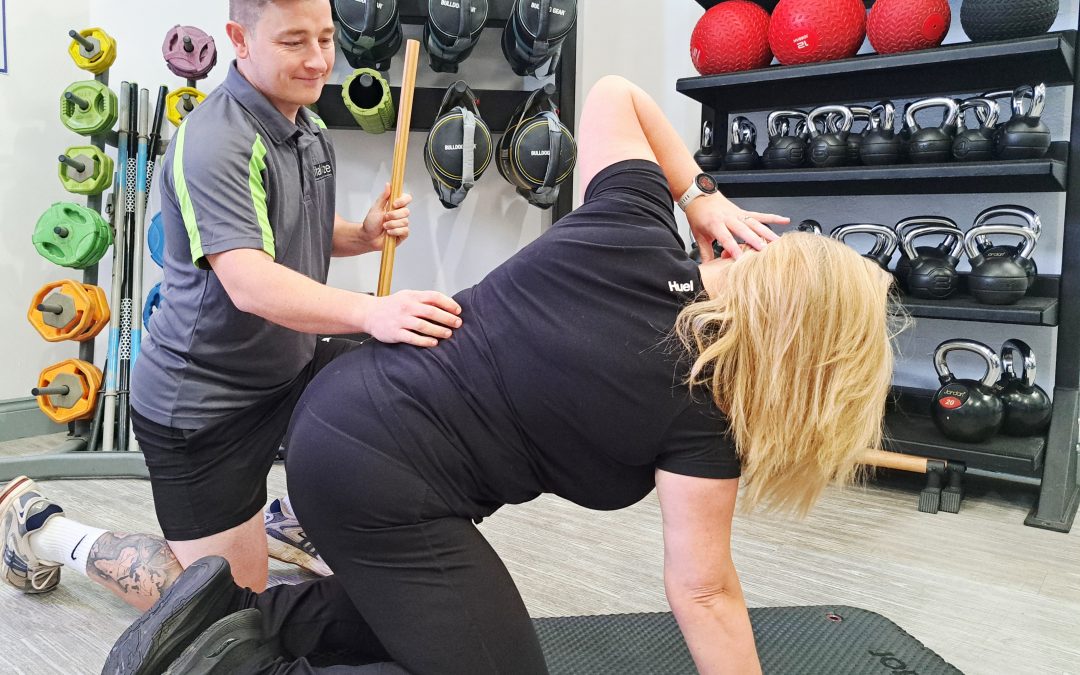
In a four-point kneeling position, guide one arm underneath your body and rotate through the upper back. This movement promotes thoracic rotation and helps reduce tension through the posterior shoulder and upper back.
Thoracic Rotations in sitting:
Sit upright with your feet flat, gently rotate your upper body to one side while keeping your hips facing forward, using your hands to guide the movement, then return to centre and repeat on the other side with slow, controlled motion.
The Role of Physiotherapy in Managing Upper Back Stiffness
While simple exercises can be effective, persistent stiffness or associated neck and shoulder pain may require a more structured approach.
At Vitalize Physiotherapy & Sports Injury Specialists, physiotherapy assessment looks beyond the area of discomfort. This includes evaluating posture, movement patterns, strength and joint mobility to identify contributing factors.
Treatment may include:
- Hands-on techniques such as joint mobilisation to improve thoracic movement
- Targeted exercise programmes to restore strength and control
- Advice on posture and activity modification
- Rehabilitation strategies to support long-term improvement
The aim is not just to reduce symptoms, but to address the underlying causes and prevent recurrence.
Upper back stiffness is often a reflection of how the body is being used day to day. Small, consistent changes in movement, posture and activity levels can make a meaningful difference over time.
Improving thoracic mobility supports better shoulder mechanics, reduces strain on the neck and allows for more efficient movement overall. Whether related to work, sport or general activity, maintaining mobility in this area is an important part of long-term musculoskeletal health.
Vitalize Physiotherapy & Sports Injury Specialists
Ashby-de-la-Zouch & Swadlincote
Physiotherapy | Sports Injury Rehabilitation | Injury Prevention
📞 07831 465179
✉️ info@vitalizephysiotherapy.co.uk
🌐 www.vitalizephysiotherapy.co.uk

Recent Comments